


Equipment Manufacturing
Intelligent Community Unmanned Micro Supermarket Equipment Production Project of Baicheng City
1 Introduction to the Project
1.1 Project background
1.1.1 Project introduction
The robot unmanned micro supermarket equipment is a new retail business model, which implements the function of customer self-service shopping using advanced information technology means, such as self-service shopping, intelligent payment and automatic recognition.
The development of robot unmanned micro supermarket equipment relies on the support of multiple technologies, including IoT technology, big data technology, cloud computing technology, artificial intelligence technology, etc. The application of these technologies enables unmanned micro supermarket to implement intelligent management of commodities, automatic adjustment of inventory, and personalized customization of customer shopping experience. The unmanned micro supermarket equipment can improve the convenience of shopping, effectively reduce operating costs, and provide more efficient customer service.
The main application fields of robot unmanned micro supermarket equipment are communities, commercial streets, office buildings and factories in various cities, which is committed to the IOT operation and management of the whole chain of data. Through the IoT, 24h closed unmanned stores at the entrance and exit of the community and the residents' activity center area are created, providing all categories of SKUs and more advanced equipment for the shopping experience.
1.1.2 Market overview
Unmanned retail self-service terminal equipment refers to retail equipment that allows consumers to self-service all shopping activities such as store entry, selection, purchase and payment without salesmen, cashiers and other store staff. It is not limited by time and place, which can save manpower and facilitate transactions. It is a new form of commercial retail, also known as a 24-hour micro supermarketmarket.
From the perspective of cost factors, the unmanned retail model eliminates labor costs, and provides convenience for operators to reduce costs and increase efficiency. As is known to all, with the aging of China's population, labor costs are rising, which has become an unavoidable pressure factor in the retail industry. Especially in traditional convenience stores, staff costs generally account for 10% to 12% of the sales volume. The promotion of the unmanned retail model allows one employee to manage 10-20 unmanned terminal stores at the same time, which is more conducive to chain operation of brand operators on the basis of effective cost control, and makes the gross profit margin of the industry rise significantly.
With the rapid development of artificial intelligence, machine vision, sensors and other technologies, as well as the increasing popularity of mobile payment in China, the technical links required for new unmanned retail have been gradually opened up in recent years. "Unmanned stores" have become an important part of new retail. Both the giant enterprises of the Internet and the traditional retail companies are actively deploying unmanned retail, which is expected to become the next growth flashpoint.
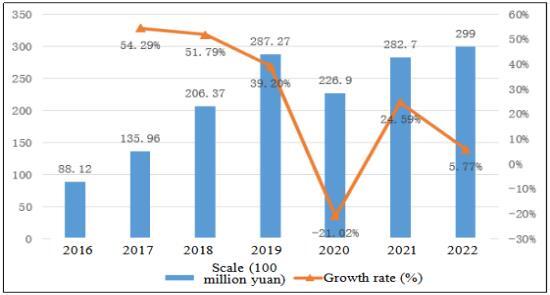
With increasing disposable income, consumption levels, urbanization ratios and penetration rate of sales points covered by vending machines, increasing awareness of social distance, and continuous innovation in vending machines, the revenue of unmanned retail and vending machine market has increased accordingly. The total sales volume of China's unmanned retail market increased from 8.812 billion yuan in 2016 to 29.9 billion yuan in 2022, with a compound annual growth rate of 25.77%. During the period, affected by the epidemic in 2020, the market size dropped to 22.69 billion yuan.
Table 1 Market Size and Growth Rate of China's Unmanned Retail From 2016 to 2022
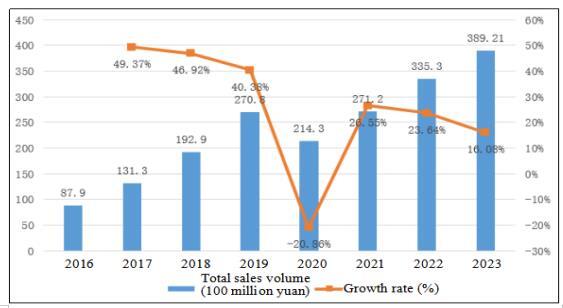
In the business model of unmanned retail, vending machines play an important role in the overall market. As a "24-hour micro supermarket", the vending machine occupies a small area, with no need for manual sales, and is not limited by time and space. For operators, vending machines are convenient to put in, and have low operating costs; for consumers, vending machines are widely deployed and convenient for shopping. Data show that the total sales volume of China's vending machine market increased from 8.79 billion yuan in 2016 to 38.921 billion yuan in 2023, with a compound annual growth rate of 26.01%.
Table 2 Total Sales Volume and Growth Rate of China’s Vending Machines From 2016 to 2023
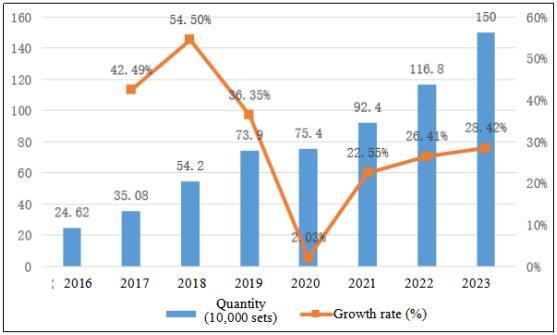
China's vending machine retail market is extremely dispersed. Due to the limited supply chain capabilities, supply chain costs and operation capabilities of individual operators, it is very challenging for operators who lack operational management and do not have strong supply chain capabilities to develop the vending machine retail network to a large scale and maintain stable profitability. In 2023, the output of vending machines in China was 712,200 sets, and the total number of vending machines in China was close to 1.5 million sets, with a compound annual growth rate of about 30.39% from 2016 to 2023.
Table 3 Quantity and Growth Rate of China’s Vending Machines From 2016 to 2023
The expansion of the market size of unmanned retail self-service terminal equipment mainly benefits from technological progress, the improvement of consumers' demand for convenience and the enhancement of personalized service preferences. In addition, the application scenarios of unmanned retail self-service terminal equipment continue to expand, covering communities, office buildings, shopping malls, schools, transportation hubs, hospitals and other scenarios, which have the characteristics of large flow of people and strong consumer demand, providing a good market environment for the layout of unmanned retail self-service terminal equipment and further promoting the expansion of market scale.
The market competitions of unmanned retail self-service terminal equipment are fierce, and there are mainly participators, including start-ups, E-commerce giants, traditional retail enterprises, etc. Start-ups such as Bingo Box, F5 Future Store and XBL have continuously launched new unmanned retail solutions through technology R&D and model innovation, and have occupied a certain share in the market. E-commerce giants such as Alibaba, JD and Suning have rapidly deployed the market through the advantages of capital and resources. Traditional retail enterprises are also actively transforming to join the ranks of unmanned retail, such as Wahaha. Participators compete for the market share through different business models and by different technical means, driving the rapid development of the whole industry.
The improvement of people's living standards has led to the shift in the consumption content from survival-oriented consumption to development-oriented consumption with spiritual experience and pleasure as the mainstay. The consumption structure of social residents is constantly changing, the trend of consumption upgrading is obvious, and the momentum of personalized and diversified consumption is rising. The automated shopping experience and convenient consumption methods of unmanned retail will attract the new-generation young consumer groups. With the combined effect of multiple factors such as technological progress, consumption upgrading and policy support, the unmanned retail self-service terminal equipment market will maintain a continuous growth trend.
1.1.3 Technical analysis
The modern production process and the automated production line are used in the project, and the production process and technology are mature, with large-scale production conditions. The project production process includes design and development, material procurement and processing, parts manufacturing and assembly, assembly and debugging, quality inspection and packaging.
Design and development: Suitable products are designed based on market demand and user requirements. The development process includes aspects such as design appearance, functions, software, etc.
Material procurement and processing: The required materials, including metal parts, plastic shells, electronic elements, etc. are purchased according to the design requirements, At the same time, material processing is carried out, metal parts and plastic shells are cut, stamp and bend, and the structural skeleton of intelligent micro supermarket equipment is produced.
Part manufacturing and assembly: For electronic elements, PCB design and circuit board manufacturing shall be carried out. Afterwards, electronic elements are welded to the PCB, and software programming and other work are performed At the same time, other parts are manufactured and assembled.
Assembly and debugging: All parts are assembled according to the design requirements before electrical connection and mechanical linkage. After the assembly is completed, debugging and testing of the machine are carried out to ensure that it functions properly.
Quality inspection and packaging: The intelligent micro supermarket equipment assembled is subject to quality inspection, including visual inspection, functional testing, etc. After passing the inspection, the machine is packaged, including outer packaging and inner packaging, so as to ensure that it will not be damaged during transportation.
1.1.4 Advantageous conditions of project construction
(1) Policy advantages
In July 2021, 12 departments such as the Ministry of Commerce issued the Guidelines for the Construction of Quarter-hour Convenient Living Circle in Cities to encourage the development of new retail formats such as intelligent community stores, unattended convenience stores, and self-service vending machines.
In December 2021, the State Council issued the 14th Five-year Plan for the Development of the Digital Economy to support physical consumption places to build new digital consumption scenarios, promote applications such as non-contact services, improve scenario consumption experience, and cultivate the awareness and habits of digital consumption among the whole people.
In July 2022, 6 departments such as the Ministry of Science and Technology issued the Guiding Opinions on Accelerating Scenario Innovation and Promoting High-quality Economic Development with High-level Application of Artificial Intelligence, proposing to actively explore emerging scenarios such as unmanned container retail, unmanned supermarkets and smart shopping guides in the field of consumption.
In December 2022, the State Council issued the Outline of the Strategic Plan for Expanding Domestic Demand (2022-2035), proposing the development of new retail formats such as smart supermarkets, smart stores and smart restaurants.
In February 2023, the State Council issued the Outline for the Construction of a Quality Power, proposing to promote the standardized and orderly development of new models such as online shopping and mobile payment, and encourage the diversified and integrated development of retail formats such as supermarkets and E-commerce platforms.
In July 2023, 13 departments such as the Ministry of Commerce issued the Three-year Action Plan for Comprehensively Promoting the Construction of Quarter-hour Convenient Living Circle in Cities (2023-2025), proposing to develop smart stores, shared power transmission, smart express boxes and other formats, and provide on-site interaction, contactless transactions, smart settlement, self-service sales and other services to improve the digital experience.
In August 2024, the State Council issued the Opinions on Promoting the High-quality Development of Service Consumption, proposing to accelerate the digital empowerment of life services, build new consumption scenarios such as smart business districts, smart blocks and smart stores, and accelerate the layout of new business formats such as unmanned retail stores, self-pickup cabinets and cloud cabinets.
(2) Resource advantages
Zhenlai County covers an area of 4,718.69 square kilometers. The county has a total of 187,300 hectares of cultivated land, 404.19 hectares of garden land, 40,300 hectares of forest land, 41,100 hectares of grassland, 13,800 hectares of urban and industrial and mining land, 9,563.47 hectares of transportation land, 95,200 hectares of water area and water conservancy facilities, and 84,200 hectares of other land. There is sufficient industrial and construction land.
Zhenlai County is rich in power resources, with a clean energy development area of 600 square kilometers, a total installed capacity of thermal power and clean energy within a radius of 100 kilometers, a full load power generation capacity of 16 billion kWh, electricity consumption of the whole society of 5 billion kWh and annual surplus electricity of 11 billion kWh. It is one of the first batch of clean energy demonstration cities and wind power local consumption demonstration areas in China.
(3) Location advantages
Zhenlai County is located in the junction of three major resource provinces (regions), namely, Heilongjiang, Jilin and Inner Mongolia, with the reputation of “Cockcrow heard in three provinces”. Within a radius of 200 kilometers, there are 5 prefecture-level cities (Songyuan, Baicheng, Qiqihar, Daqing and Ulanhot) and 5 regional airports around, only 40 kilometers away from Baicheng Airport. There are two railways and two expressways in the territory. It is an important "hub" city at the junction of Heilongjiang, Jilin and Inner Mongolia, and is the only place to enter from Inner Mongolia and Heilongjiang. With convenient transportation and developed logistics, it has a strong radiation driving advantage.
(4) Talent advantages
Baicheng City has a number of scientific research institutes such as the Agricultural Research Institute, the Forestry Research Institute, the Agricultural Machinery Research Institute and the Animal Husbandry Research Institute, with 40,873 professional technicians, including 6,898 persons with senior titles, 18,409 persons with intermediate titles, and 15,566 persons with primary titles.
In 2023, Baicheng City issued the 20 Measures for Strengthening and Improving the City's Talent Work, aiming to revitalize local talent resources to the maximum limit based on geographical advantages, accelerate the construction of 3 teams, namely, expert strategic talents, practical local talents, and technical blue-collar talents, and provide a strong talent guarantee for comprehensive construction of a new Baicheng with socialist modernization.
1.2 Contents and scale of project construction
1.2.1 Product scale
After the project reaches the designed capacity, the annual output of robot intelligent micro supermarket equipment will be 20,000 sets. The project will be constructed in two phases, with annual output of 6,000 sets of robot intelligent micro supermarket equipment in Phase I project, and 14,000 sets of robot intelligent micro supermarket equipment in Phase II project.
1.2.2 Contents of project construction
The project covers an area of 60,000㎡, with a gross floor area of 70,000㎡.
Phase I project covers an area of 20,000 ㎡, with a gross floor area of 30,000 ㎡. Administrative buildings, production workshops, raw material warehouses, R&D office buildings, staff dormitories, staff canteens, power distribution rooms, guard rooms and other buildings are mainly constructed, 10 robot intelligent micro supermarket production lines are purchased, and water and electricity heating, ground hardening, greening and other supporting facilities are constructed.
Phase II project covers an area of 40,000 ㎡, with a gross floor area of 40,000㎡. Buildings such as production workshops, centralized data control centers, operation centers and regional supply chain centers are mainly constructed, 10 robot intelligent micro supermarket production lines and 3 self-developed product production lines are purchased, and water and electricity heating, ground hardening, greening and other supporting facilities are constructed.
1.3 Total investment of the project and capital raising
1.3.1 Total investment of the project
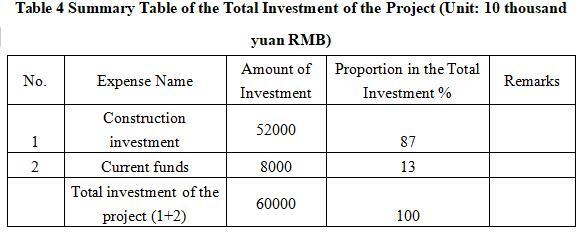
The total investment of the project is 600 million yuan, including the construction investment of 520 million yuan, and the current funds of 80 million yuan.
1.3.2 Capital raising
Self-raised by the enterprise.
1.4 Financial analysis and social evaluation
1.4.1 Main financial indexes
After the project reaches the production capacity, its annual sales income will be 400 million yuan, its profit will be 150 million yuan, its investment payback period will be 7.0 years (after the tax, including the construction period of 3 years), and its investment profit rate will be 25.0%.
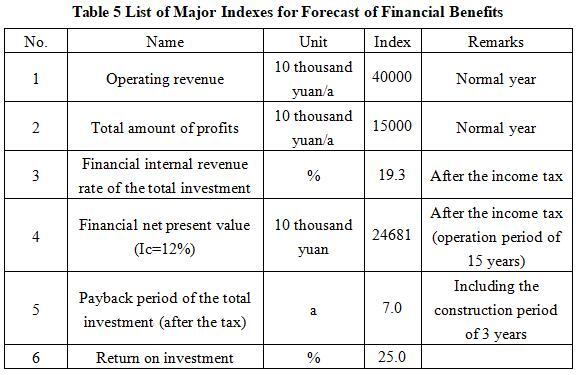
Note: "10 thousand yuan" in the table is in RMB.
1.4.2 Social evaluation
The project construction has met the changes in consumer demand, significantly improved the operation efficiency, reduced labor and logistics costs, optimized supply chain management, improved logistics efficiency, and promoted the balanced development of urban and rural economies. The project leads the transformation of the new retail era by providing a convenient and fast shopping experience and business opportunity growth potential.
1.5 Cooperative way
Sole proprietorship and joint venture.
1.6 What to be invested by the foreign party
Funds, equipment and technology.
1.7 Construction site of the project
Zhenlai County, Baicheng City.
1.8 Progress of the project
The project proposal has been prepared.
2. Introduction to the Partner
2.1 Basic information
Name: Zhenlai County Project Development Service Center
Address: 1777 Xinxing South Street, Zhenlai Town, Zhenlai County, Baicheng City
2.2 Overview
Zhenlai County is in the northwestern part of Jilin Province and at the junction of three provinces (regions), namely, Heilongjiang, Jilin and Inner Mongolia. It is the fusion and aggregation zone of Songnen Plain and Horqin Grassland. It is to the east of the Nenjiang River, faced with Dorbet Mongolian Autonomous County and Zhaoyuan County in Heilongjiang Province across the river, connected to Ulaanhot City of Inner Mongolia Autonomous Region in the west, bounded by Tailai County, Heilongjiang and Jalaid Banner, Inner Mongolia Autonomous Region in the north, and next to Baicheng City, Da'an City and Taobei District respectively in the southwest and south. Zhenlai County is a national large-scale commercial grain base and livestock development demonstration base. Zhenlai County has obvious location and transportation advantages. With Zhenlai County as the center and 500 km as the radius, it can fully cover the industrial cities and resource-rich areas in the northeastern region.
In 2023, the county's GDP reached 9.48 billion yuan, with a YoY growth by 6.6%; the fixed asset investment reached 2 billion yuan, with a YoY growth by 23.6%; the total output value of industries above designated size reached 2.7 billion yuan, with a YoY growth by 9%; the value-added of industries above designated size reached 780 million yuan, with a YoY growth by 7%; the retail sales volume of consumer goods reached 1.42 billion yuan, with a YoY growth by 7%; the local fiscal revenue reached 400 million yuan, with a YoY growth by 20%; the per capita disposable income of urban residents increased by 8% year-on-year; and the per capita disposable income of rural residents increased by 9% year-on-year.
2.3 Contact method
2.3.1 Contact method of cooperator
Contact unit: Zhenlai County Project Development Service Center
Contact person: Tian Tian
Tel: +86-15886168765
2.3.2 Contact method of the city (prefecture) where the project is located
Contact unit: The Bureau of Commerce of Baicheng City
Contact person: Xu Zengchun
Tel: +86-436-3203010
+86-13894682986
E-mail: bcjhj07@126.com